
Ahmedabad, India
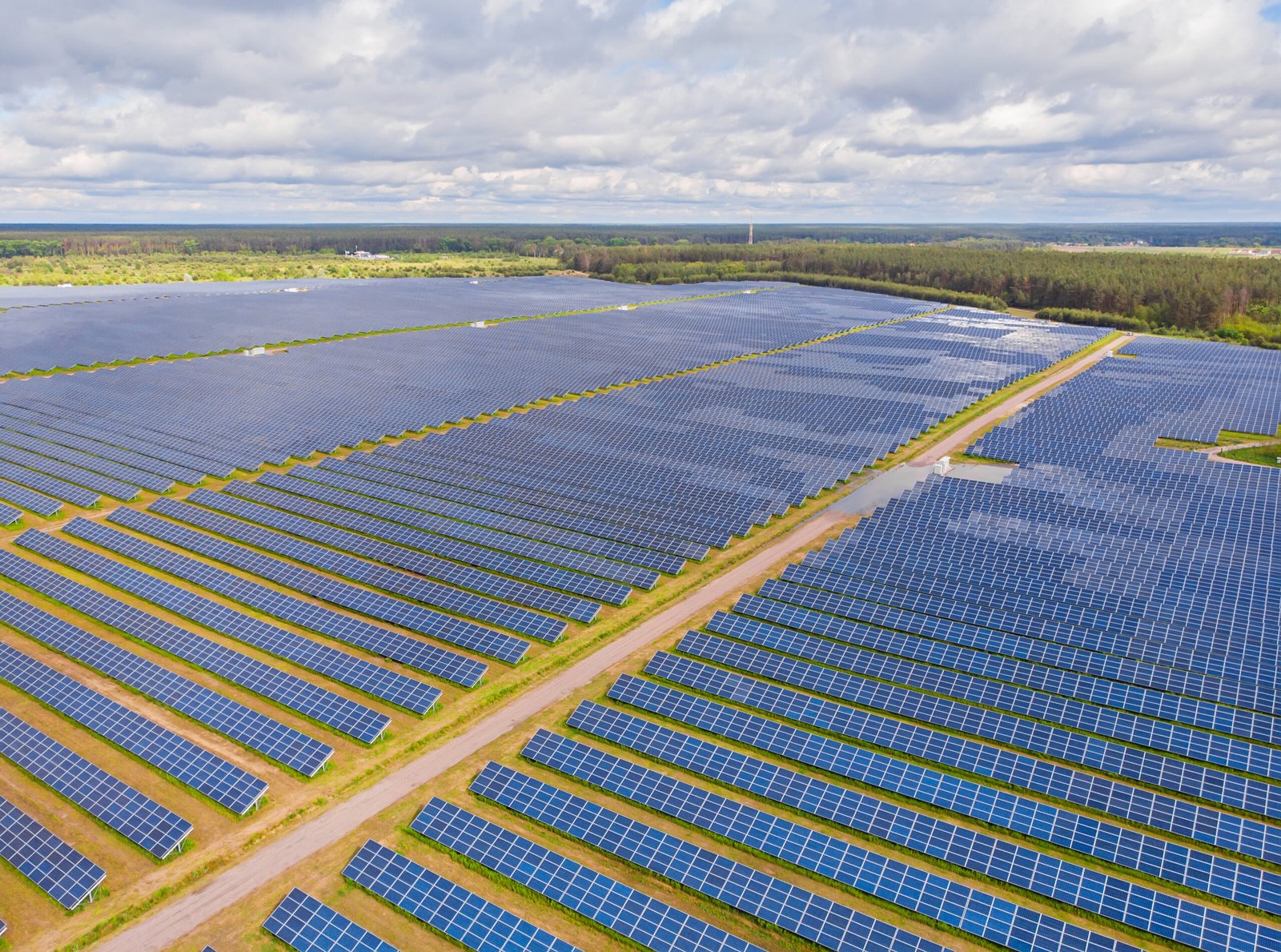
ArMee Infotech Limited has received two Letters of Award worth approximately ₹740.97 crore from Bondada Engineering Limited for Amended EPC Balance of System (BOS) packages on a 600 MW solar project at Fatehgarh, Rajasthan, Block-1 (300 MW AC) valued at ₹375.18 crore and Block-3 (300 MW AC) valued at ₹365.79 crore. ArMee’s scope covers engineering, procurement, manufacturing, supply, erection, installation, testing and commissioning of the BOS works, along with associated power evacuation infrastructure and three years of O&M and Annual Maintenance Contracts.
Read on its own, this looks like a standalone EPC contract. It isn’t. It’s the second half of a chain that started three months earlier, and tracing that chain reveals something more specific and more useful than the general “renewable projects create supplier demand” argument usually made about deals like this.
The Chain, Traced
In May 2026, Bondada Engineering received a Notification of Award from NTPC Renewable Energy Limited for the exact same project, 600 MW at Fatehgarh, covering the identical Block-1 and Block-3 — valued at approximately ₹816 crore, executed under EPC mode with three years of O&M. That made it Bondada’s second order from the NTPC Group, taking its cumulative NTPC order inflow to roughly ₹1,207 crore and its total solar EPC order book to approximately 5.3 GWp.
ArMee’s ₹740.97 crore award, explicitly described as “Amended EPC BOS Packages” for the same blocks of the same project, is Bondada subcontracting the balance-of-system execution work to ArMee. Put the two numbers side by side: ArMee’s contract represents roughly 91% of Bondada’s original ₹816 crore NTPC award value, for what both companies confirm is the same physical scope of work — design, engineering, manufacturing, supply, erection, installation, testing, commissioning and O&M.
That’s not a hypothetical “ripple effect” of the kind these stories usually gesture toward in the abstract. It’s a traceable, quantifiable instance of it: a prime EPC contractor passing the overwhelming majority of its own contract value down to a specialised subcontractor to actually execute the physical scope, while retaining the prime contractor relationship and presumably a coordination and risk-management margin on the remainder.
Why the 91% Figure Is the Real Story
This raises a genuinely interesting structural question that the “opportunity for the wider supply chain” framing usually skips past: if Bondada is passing through roughly nine-tenths of its contract value to ArMee for BOS execution, what does the prime contractor actually retain, and why does the NTPC Group award BOS-heavy solar EPC contracts to companies that subcontract this much of the physical work? The likely answer sits in how large developers de-risk execution — NTPC Group’s relationship is with Bondada, who carries the primary contractual and delivery risk with the developer, while ArMee brings specific BOS execution capability and capacity that Bondada may not fully hold in-house at this scale. That’s a genuine value proposition, but it also means the actual industrial capability — the engineering, manufacturing and installation work — sits disproportionately with the subcontractor, not the company whose name is on the original NTPC award.
For India’s broader BOS and EPC ecosystem, this is the more instructive pattern to watch: large renewable capacity awards increasingly flow through a layer of prime contractors who function partly as risk-bearing intermediaries, with the specialised execution capability concentrated in a second tier of companies like ArMee. Understanding who actually holds the manufacturing and installation capability, versus who holds the contractual relationship with the developer, matters more for judging where India’s real BOS manufacturing depth sits than either headline number alone.
What the BOS Scope Actually Covers
Beyond the subcontracting structure, the physical scope itself is worth noting for why BOS work matters as much as the solar modules themselves. A utility-scale solar plant’s balance-of-system includes structures, electrical systems, cables, transformers, switchgear, power evacuation infrastructure and control systems, work that requires its own supplier network across electrical equipment, fabricated components, cabling and testing services, largely independent of who manufactures the photovoltaic modules themselves. ArMee’s three-year O&M and AMC commitment also extends this from a one-time construction contract into a recurring maintenance relationship, creating longer-tail demand for spare parts, field servicing and testing that continues well after commissioning.
The Bigger Picture
The interesting part of this story was never really “a 600 MW solar project creates industrial demand”; that’s true of every large renewable project and doesn’t require this specific order to demonstrate it. What makes ArMee’s award worth examining is that it shows, with actual traceable rupee figures, how that demand concretely moves from a developer’s original award through a prime contractor and into the hands of the company that does most of the physical work. That’s a more useful lens for judging India’s renewable EPC ecosystem than treating each new order announcement as a fresh, standalone data point.