
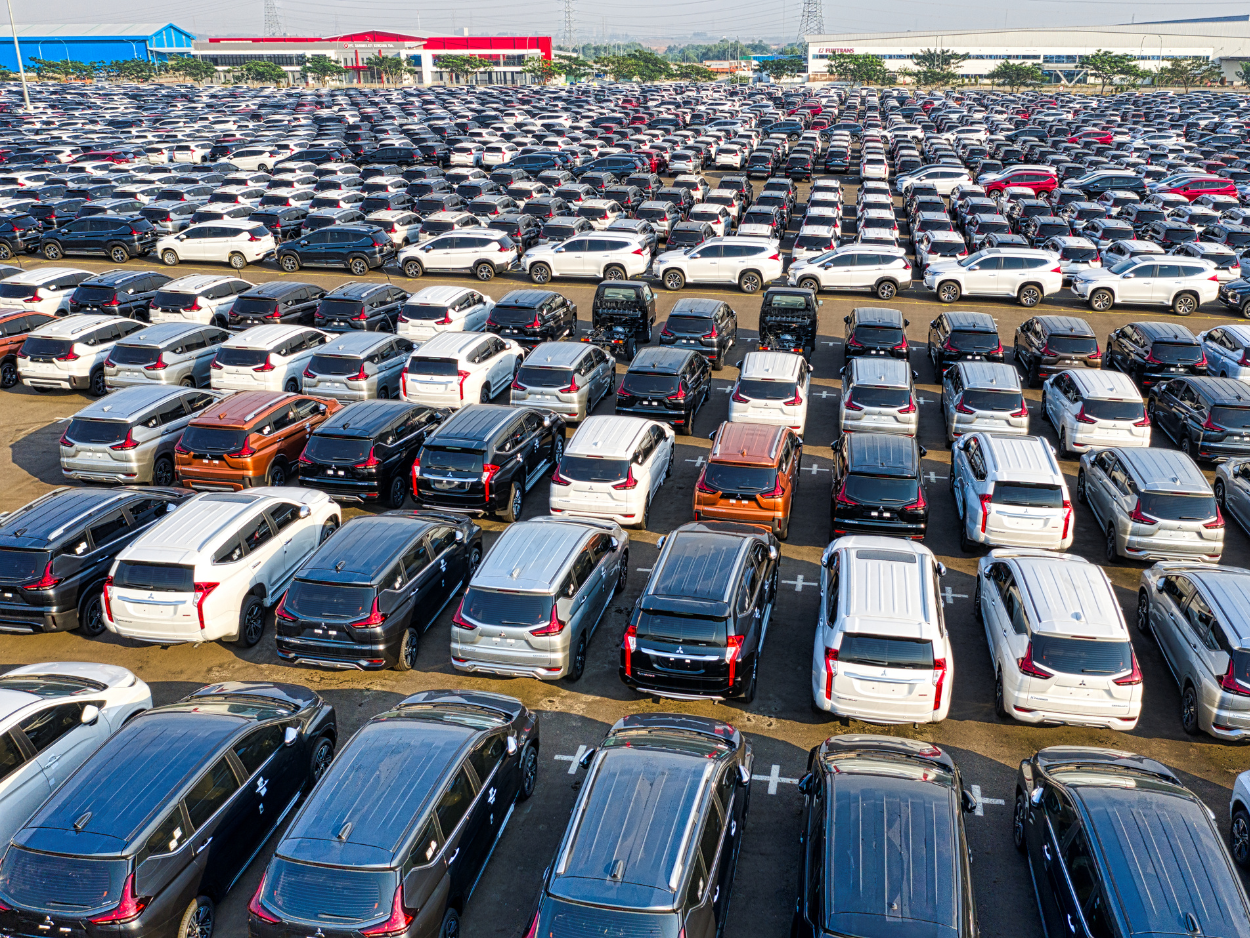
India’s automotive industry has already crossed one important milestone: it has become a major manufacturing base for global vehicle programmes. The next question is more fundamental: how much of that manufacturing capability actually exists within India?
Commerce and Industry Minister Piyush Goyal’s warning to automakers at the 66th SIAM Annual Convention points toward a change in how localisation will be viewed. Speaking on September 3, 2026, Goyal said the government is now tracking company-wise import-export data and IEC numbers to assess whether localisation claims are genuine or whether domestic operations still depend heavily on imported value. He described instances where companies set up a separate Indian entity, import goods, and carry out only “a nominal 10-15 per cent value add” before selling the finished product, behaviour he referred to as coming from a few “black sheep” in the industry, without naming specific companies.
That distinction matters.
A vehicle can be assembled in India while critical value continues to come from elsewhere: electronics, specialised components, materials, tooling, technologies and engineering systems. A domestic assembly line alone does not create a deep manufacturing ecosystem.
True localisation happens when the capability behind the product also moves.
What Genuine Localisation Requires
That means developing suppliers who can manufacture increasingly complex components, meet global quality standards, invest in tooling and automation, solve engineering problems, and eventually supply not only Indian plants but also overseas programmes. Goyal pointed to Japanese automakers as an example worth following, citing their partnerships in India, their investment in building supplier ecosystems, and their progress toward manufacturing some of the world’s most efficient and competitively priced cars domestically.
This is where localisation becomes more than an import-substitution exercise. It becomes a capability-building exercise.
The Multiplier Effect
The automotive industry is particularly important because of its multiplier effect. When an OEM localises a component, the opportunity does not stop with one supplier. It can create demand for machining, casting, forging, plastics, electronics, tooling, heat treatment, testing, logistics and specialised engineering. Over time, these capabilities can become useful across multiple industries.
There is also another side to the equation.
If Indian suppliers become capable enough to replace imports, they should eventually become capable enough to compete outside India. Goyal made this connection directly at the convention, framing localisation and exports as two sides of the same objective rather than separate goals and put real numbers behind the export ambition. He said India recorded $863 billion in goods and services exports last year against a $1 trillion target for the current year, a gap of roughly $137 billion that the government wants closed partly through automotive and component exports. At ACMA’s own 66th Annual Session the previous day, Goyal had already urged auto-component makers to think beyond exporting from India altogether encouraging companies to establish manufacturing facilities in overseas markets while keeping domestic production and employment intact so that Indian plants continue supplying both domestic and export demand while overseas plants serve local customers directly.
The stronger model, then, is not simply:
Local demand → supplier capability → technology investment → global quality → export competitiveness.
It is that same chain, deliberately extended outward once Indian capability is strong enough to plant itself in other markets too.
Trade Agreements as the Access Layer
Goyal also pointed to India’s expanding trade-agreement network as the market-access mechanism behind this ambition, the India-UK Comprehensive Economic and Trade Agreement (CETA), which took effect in July 2026, alongside agreements with New Zealand and Oman, and ongoing negotiations with the United States and the European Union. For component manufacturers, though, tariff access is only one part of the calculation; buyers still weigh delivery reliability, certification, traceability, localisation depth and service coverage before awarding contracts, meaning market access alone does not guarantee competitiveness.
Goyal’s call to reduce import dependence also extended to critical minerals, magnets and specialised materials, an area where the government has previously flagged initiatives such as the Critical Mineral Mission as part of the broader resilience strategy, alongside support for auto and component clusters through plug-and-play industrial infrastructure.
India’s automotive opportunity, therefore, is not simply to manufacture more vehicles.
It is to build more of the industrial knowledge, technology and supplier capability embedded inside every vehicle.
That is ultimately what will determine whether “Made in India” becomes a manufacturing advantage or remains largely an assembly advantage.