
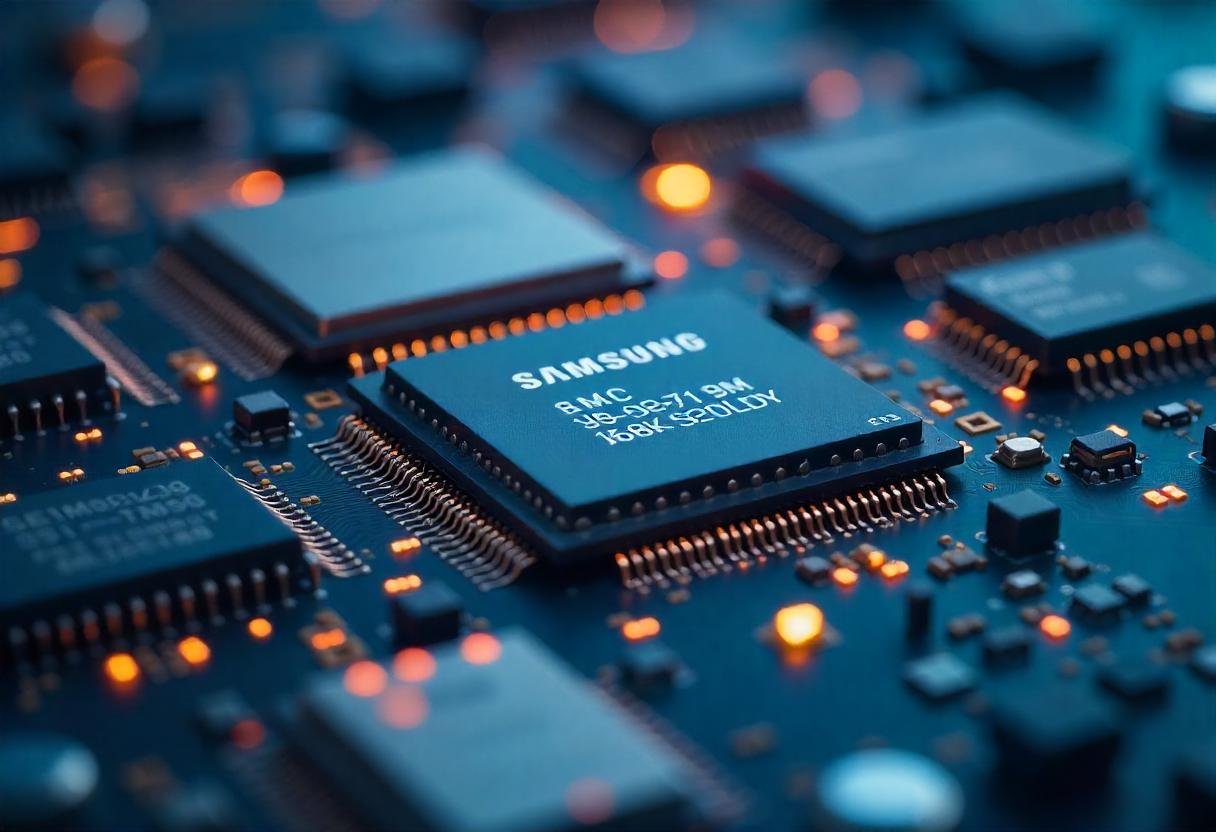
Samsung’s latest restructuring in India is drawing attention not just for its immediate business impact but for what it reveals about the fragile economics underpinning modern electronics manufacturing.
The trigger is straightforward: global memory-chip prices have more than doubled, squeezing margins across the consumer electronics industry. In response, Samsung India has begun cutting jobs within its television and home-appliance divisions, with reports indicating that 80–100 executives have been affected so far. Industry watchers say further restructuring cannot be ruled out.
A Supply Chain Vulnerability Hiding in Plain Sight
While the layoffs are the visible headline, the more significant story lies deeper in the supply chain. A television or appliance may be assembled entirely within India, but its underlying economics can still hinge on components sourced thousands of kilometres away. This is the core vulnerability facing electronics manufacturers today.
When a critical input like memory chips spikes in price, manufacturers are left with a narrow set of options: absorb the added cost, pass it on to consumers, redesign the product, cut costs elsewhere in the value chain, or simply accept thinner margins. Samsung is now navigating exactly this dilemma.
AI Demand Is Reshaping the Semiconductor Market
Adding another layer of complexity, the global semiconductor industry is being reshaped by artificial intelligence. Surging demand for memory chips used in AI infrastructure is pulling manufacturing capacity toward higher-value applications, leaving conventional consumer electronics segments exposed to tighter supply and higher prices.
The Real Lesson for India’s Electronics Ambitions
For India, which has invested heavily in positioning itself as a global electronics manufacturing hub, the Samsung episode carries a clear message: assembly localisation is necessary, but it is not sufficient.
Building genuine manufacturing resilience requires local capability across a much wider set of layers, including:
-
Semiconductors and components
-
Displays and batteries
-
Passive components and precision parts
-
Testing and packaging
-
Advanced materials
This doesn’t mean every component must be manufactured domestically; that would be neither practical nor economically efficient. Instead, the goal should be to build stronger domestic and regional alternatives in the strategically critical layers of the value chain, reducing the number of single points of failure that leave Indian factories exposed to external shocks.
Redefining Manufacturing Resilience
Perhaps the most important takeaway from Samsung’s situation is a redefinition of what “manufacturing resilience” actually means. A factory can be efficient, highly automated, and fully local and still remain deeply vulnerable if a single imported component determines its cost structure and availability.
India’s next phase of electronics growth, therefore, cannot be measured solely by how many devices get assembled domestically. The real opportunity lies in moving deeper into the component and technology layers that determine a product’s cost, performance, and long-term availability.
As the industry increasingly recognises, the strongest manufacturing ecosystem isn’t the one that assembles products fastest; it’s the one with the greatest control over what goes into them.