
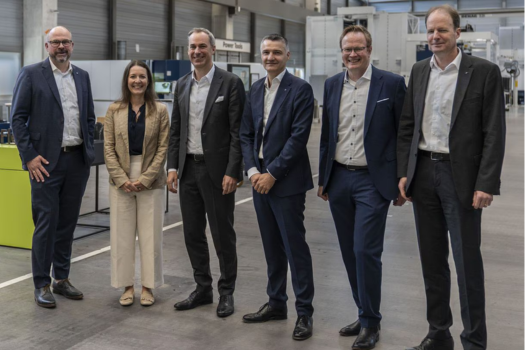
Siemens and TRUMPF have announced a strategic partnership aimed at transforming industrial production through advanced digital manufacturing solutions. The collaboration combines the Siemens Xcelerator portfolio with TRUMPF’s expertise in machine building and software.
A key focus of the partnership is tackling one of manufacturing’s longstanding challenges — the gap between information technology (IT) and operational technology (OT) systems, which often limits efficiency and innovation on the shop floor. By developing open and interoperable IT interfaces, the two companies plan to create seamless integration across systems, paving the way for enhanced artificial intelligence (AI) readiness in motion control applications.
“Real transformation in a factory begins when machines on the shop floor are connected through a shared digital backbone – so that data flows seamlessly, decisions happen faster, and production responds to changing conditions,” said Cedrik Neike, Member of the Managing Board at Siemens AG and CEO of Siemens Digital Industries. “By working with TRUMPF, we’re making that connection effortless. We’re bridging the gap between IT and OT so that manufacturers can move faster, adapt in real time, and prepare for the AI era. I’m proud to see two European champions leading the way.”
Overcoming complexity with seamless system integration
In today’s rapidly evolving industrial landscape, software is no longer just an add-on to hardware, it’s becoming the key differentiator in manufacturing. From intelligent control systems to data-driven optimization, a seamless integration of hardware and software enables entirely new levels of flexibility, efficiency, and value creation. For Siemens and TRUMPF, this shift has created significant opportunities, but also new complexities. Therefore, collaboration is essential and will enable faster innovation cycles, better integration of hardware and software, and a more scalable approach to delivering solutions and value through standardized interfaces.
The collaboration will also deliver tangible customer benefits through modular system architecture and unified system solutions. Standardized interfaces will allow for seamless connectivity between shop floor equipment and enterprise-level systems. Customers will benefit from increased operational efficiency, reduced engineering costs, and future-proof scalability by using open, modular automation solutions. These are critical to ensure future-proof AI readiness, that will permit customers to achieve faster time-to-market, improved production flexibility, and competitive manufacturing operations.
“TRUMPF is a leading company for smart factory solutions in the sheet metal industry. The cooperation with Siemens underpins our position as a solution provider. Thanks to the open standards, our customers will benefit even more from the digital networking of the production – from our machines to robots, grippers and part recognition with the help of AI. We’re taking industrial manufacturing to a whole new level with Siemens”, said Stephan Mayer, CEO of Machine Tools at TRUMPF.
The partnership builds on regular exchanges among development teams at Siemens and TRUMPF, which underscores the importance of vibrant ecosystems for solving industry’s most pressing challenges.