
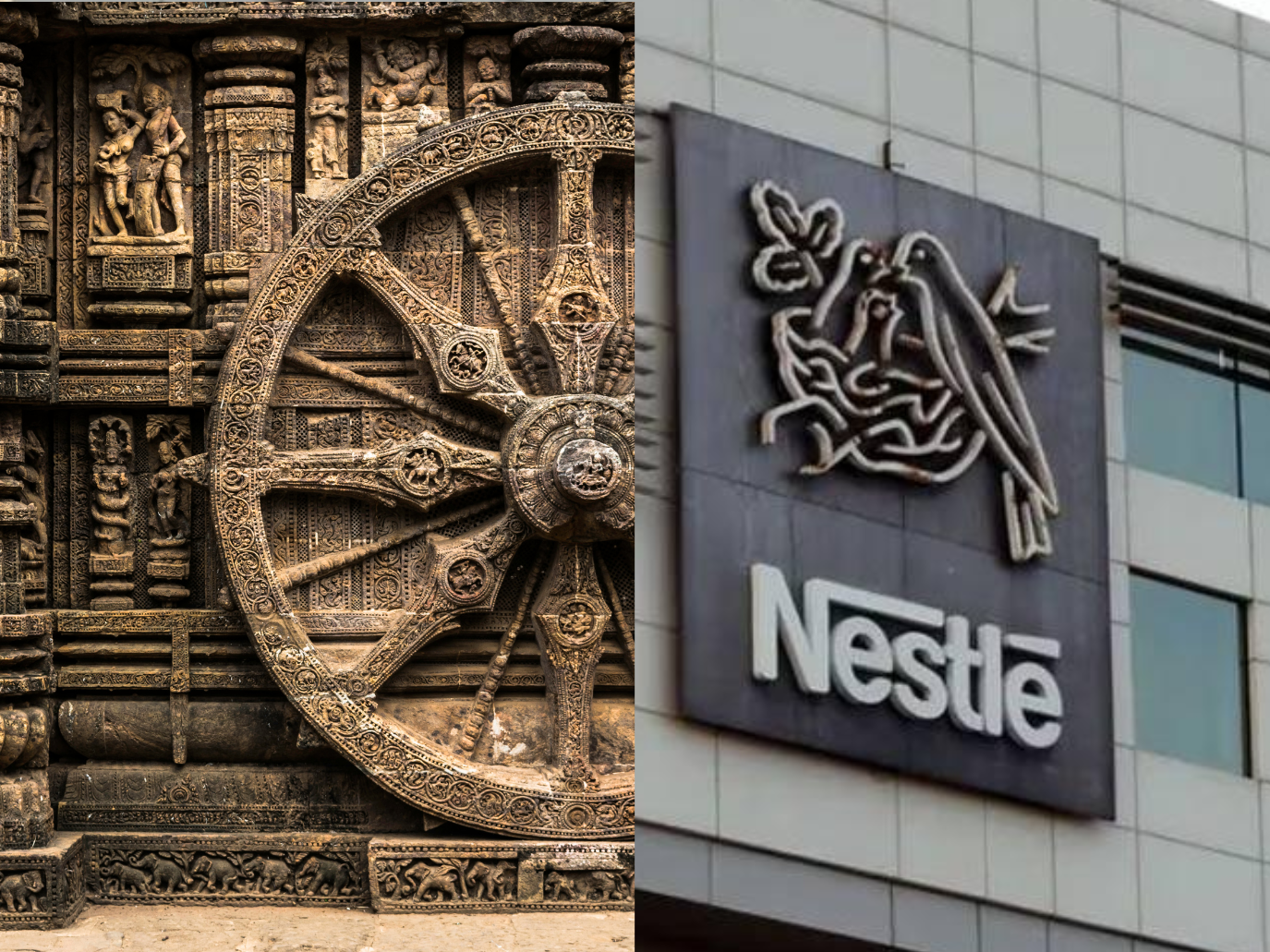
Nestlé India is building its 10th manufacturing facility in Odisha – the company’s first factory in eastern India. The Khordha facility involves an initial investment of approximately ₹900 crore and will manufacture products from Nestlé’s foods portfolio, including prepared dishes and cooking aids.
The investment itself is significant. But the more interesting part is how Nestlé says it’s approaching this expansion. The company says sustainability is no longer treated as a separate function or standalone budget, it’s being considered across capital expenditure, equipment purchases, production lines, product development, packaging and sourcing.
Sustainability Starts Before Production
Sustainability tends to get associated with what happens after a product is manufactured waste management, energy efficiency, water recycling, and emissions reduction. All of that matters, but the bigger opportunity often begins earlier. When a manufacturer decides which machine to buy or how much water a process will consume, that decision shapes the environmental footprint for years afterward.
Nestlé says each new machine, capital investment and product formulation is now evaluated with a sustainability element built into the decision itself, effectively moving sustainability from the ESG department into the engineering and investment process. That’s a meaningfully bigger shift than it sounds.
Why the Odisha Location Matters
The Khordha facility isn’t simply another addition to Nestlé India’s network, it’s the company’s first plant in the east, expanding a footprint that currently spans nine facilities nationwide, from Moga (1961) to Sanand, Gujarat (2021). For a food manufacturer, location genuinely matters: raw materials need to move in, finished products need to move out, and logistics affects both cost and emissions directly. A more distributed manufacturing network doesn’t just add capacity; it reshapes how materials move across the supply chain.
The Factory Is Only One Part of the Equation
This is the most important point in Nestlé’s approach. A food company’s environmental footprint doesn’t sit entirely inside its factories. Nestlé says agriculture, particularly dairy, represents more than 70% of its sustainability footprint, meaning an efficient factory alone can’t fix a supply chain still vulnerable to climate and resource pressure. That’s why Nestlé’s sustainability programmes extend into dairy, coffee and spice sourcing alongside manufacturing and packaging, covering a much wider chain: farm → raw material → logistics → factory → packaging → distribution → consumer → waste.
Technology is following the same shift. Nestlé says it uses digital tools, AI and satellite monitoring to help farmers track water use, fertiliser application and weather patterns — extending “smart manufacturing” thinking upstream, into the fields that feed the factory rather than just the factory floor itself.
Manufacturing Insight: Scale Is What Makes This Credible
Nestlé sources around 92% of its raw materials from within India and works with roughly 80,000 dairy farmers, 5,000 coffee farmers under its Nescafé Plan, and 2,500 spice farmers across eight states. That scale is what actually makes the sustainability claim meaningful rather than aspirational; a company this dependent on Indian agricultural supply chains has a real commercial incentive to make those chains more resilient, not just a reputational one. If agricultural productivity improves and logistics gets more efficient, manufacturing becomes more predictable too. The factory, in other words, is one node in a much larger system, not the whole story.
Packaging follows a similar logic. Beyond product protection and shelf life, Nestlé is now weighing recyclability, material reduction and alternative materials, while acknowledging there’s unlikely to be one universal packaging solution, since the right material depends on the product, its shelf life and how consumers actually use and dispose of it. That makes packaging as much an engineering challenge as an environmental one.
The Ripple Effect
If large FMCG companies increasingly build sustainability into procurement and capital decisions, suppliers are likely to feel it directly. Machine manufacturers could see rising demand for energy-efficient equipment as standard capex criteria shift. Packaging companies may need to develop genuinely recyclable or material-efficient alternatives to stay competitive for large contracts. Automation providers gain opportunity by helping manufacturers monitor energy and water consumption in real time. Engineering firms may increasingly be asked to design lower-resource-consumption processes from the outset. And suppliers broadly could start being evaluated on environmental performance alongside cost and quality, gradually changing what it means to be a preferred industrial supplier in India’s FMCG ecosystem.
Regionally, Odisha’s Food Processing Policy framework and existing MSME base could see genuine upstream benefit too; supplier ecosystems around spices, flour and packaging materials have real room to develop around a facility of this scale.
The Bigger Picture
The headline is simple: Nestlé India is building its 10th factory in Odisha. The deeper story is what it represents: a manufacturer treating sustainability not as an add-on cost, but as a factor considered before a machine is even purchased. As Nestlé’s next generation of factories compete less on raw output and more on how efficiently and responsibly they produce it, sustainability stops being a separate objective. It becomes part of manufacturing excellence itself.