
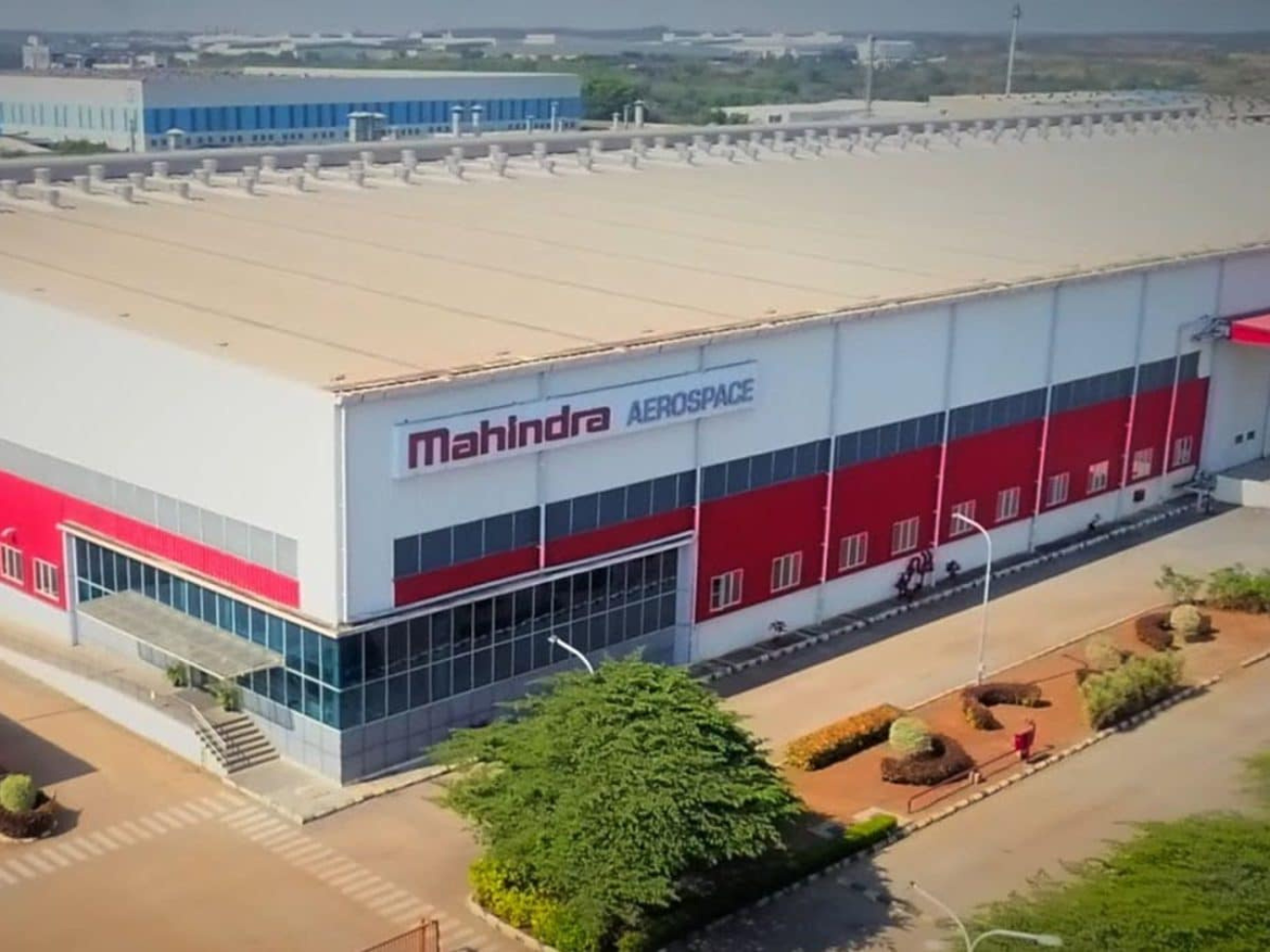
India’s aerospace manufacturing landscape is undergoing a historic transformation, shifting from import dependence to indigenous innovation and global competitiveness. Against this backdrop, Mahindra Group’s launch of Mahindra Novavayu Aerospace Ltd (NAL) marks a pivotal moment, strengthening India’s engineering industry and positioning it as a future leader in aerospace manufacturing.
Market Outlook for Aerospace Manufacturing
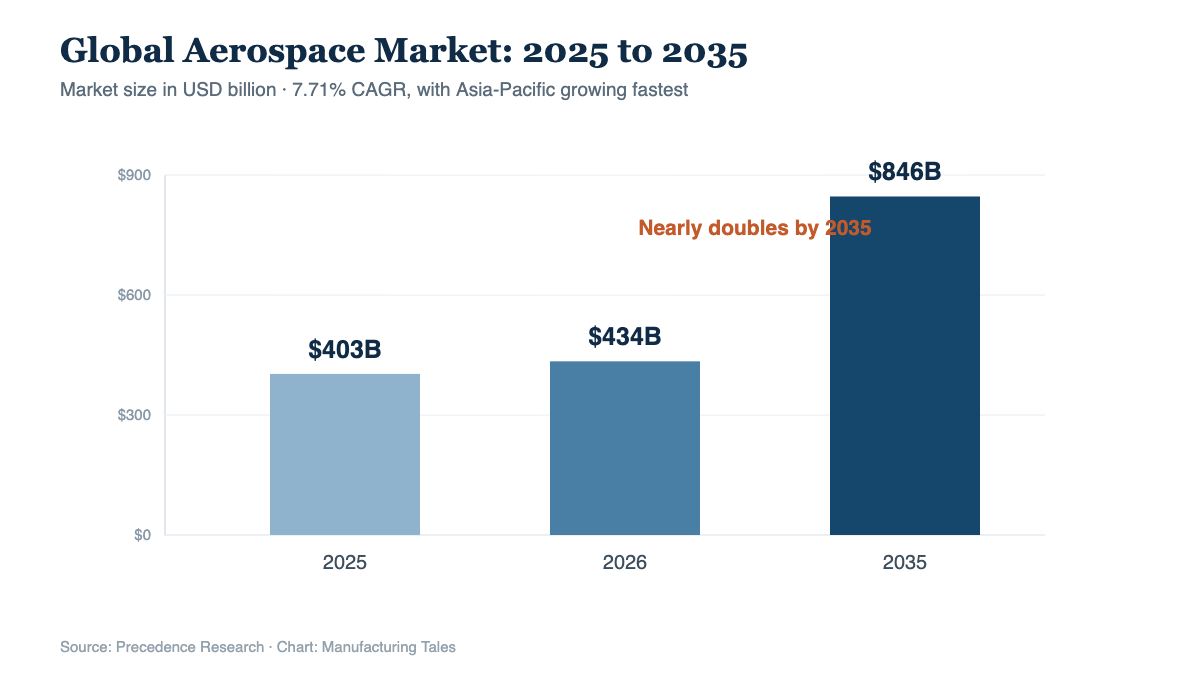
India’s aerospace ambitions are unfolding within a rapidly expanding global market. As nations invest heavily in defence preparedness, civil aviation growth, and space exploration, the demand for advanced engineering and manufacturing capabilities is accelerating. For India, this momentum offers a dual advantage: strengthening domestic self-reliance while integrating its engineering industry into global supply chains. The scale of opportunity is evident in the following projections:
According to Precedence Research, The global aerospace market size is calculated at USD 402.75 billion in 2025 and is predicted to increase from USD 434.17 billion in 2026 to approximately USD 846.30 billion by 2035, expanding at a CAGR of 7.71% from 2026 to 2035. Asia-Pacific region is estimated to expand the fastest CAGR between 2026 and 2035.
According to Research and Markets, the Aerospace dominates India’s defence industry, spanning military, civil, and space sectors, thereby augmenting with a 7.5% CAGR during the forecast period (2025-2034). Military aviation is leading with programmes such as LCA Tejas and C-295 aircraft. As per India aerospace and defence market analysis, civil aviation is growing with fleet expansion from IndiGo and Air India. Space aviation is the most rapidly developing platform, led by satellite launches and missions such as Chandrayaan-3 and Gaganyaan, facilitated by ISRO and private entities under the IN-SPACe initiative.
The Research and Markets report also states that Manufacturing, design and engineering takes the lead among services offered, driven by the Make in India campaign and new plants from companies such as Tata Advanced Systems and Adani Defence. These firms are forging alliances with international OEMs and lengthening the defence supply chain, hence promoting India aerospace and defence demand. Meanwhile, maintenance, repair, and overhaul (MRO) is the most rapidly growing, particularly in civil aviation, as companies such as Air Works and Indamer set up domestic MRO centers to minimize downtime and foreign reliance.
Mahindra Expands Aerospace Footprint
In a significant corporate development, the Mahindra Group has incorporated a new step-down subsidiary, Mahindra Novavayu Aerospace Ltd (NAL), marking another decisive step in its aerospace manufacturing strategy. According to a regulatory filing, the newly formed entity will focus on manufacturing aircraft and aerospace products while undertaking related activities, giving Mahindra a dedicated corporate structure to drive future aerospace initiatives.
The incorporation underscores Mahindra’s continued interest in expanding its presence in aerospace manufacturing, a segment where the group has steadily built capabilities through precision engineering, aerostructures, and component manufacturing. By adding NAL to its portfolio, Mahindra strengthens its position in India’s defence and aerospace ecosystem, which is increasingly shaped by domestic production, higher defence procurement, and the growing role of private sector manufacturers in global supply chains.
While Mahindra has not disclosed investment details, manufacturing locations, or project timelines, the creation of Novavayu Aerospace signals a long-term commitment to indigenous capability-building. The move comes at a time when several Indian companies are enhancing their aerospace competencies to serve both domestic programmes and international customers, reinforcing India’s ambition to become a global aerospace hub.
Impact on India’s Engineering Industry
Mahindra Novavayu Aerospace is expected to catalyse a new era for India’s engineering sector, driving innovation, strengthening manufacturing, and enhancing global competitiveness. Aerospace manufacturing demands precision engineering, involving advanced machining, materials science, and design expertise. This will expose Indian engineers to cutting-edge technologies and raise industry standards across the sector. At the same time, collaboration between industry, academia, and startups will accelerate indigenous design, intellectual property creation, and the development of advanced aerospace systems, ensuring India transitions from being a manufacturing base to a design-driven hub.
The establishment of NAL will also expand India’s supply chain capabilities, drawing local vendors and MSMEs into global value chains and upgrading their competencies to meet international benchmarks. This expansion will not only strengthen domestic industry but also enhance India’s export competitiveness, positioning the country as a reliable supplier of cost-effective aerospace solutions.
Furthermore, the adoption of advanced manufacturing techniques such as AI-driven design, additive manufacturing, and carbon composites will enhance efficiency and performance in next-generation platforms. These innovations will ensure that India’s engineering industry is not just keeping pace with global standards but setting new benchmarks in aerospace technology. In essence, Mahindra Novavayu Aerospace represents a turning point where India’s engineering sector steps confidently into a new era of aerospace innovation, manufacturing strength, and global competitiveness.
A Timely Move
The timing of NAL’s incorporation dovetails with India’s macroeconomic mandates. For decades, India has been one of the world’s largest importers of defence equipment. With policy frameworks now prioritising domestic procurement, Mahindra’s initiative places the private sector at the heart of India’s defence indigenisation drive.