
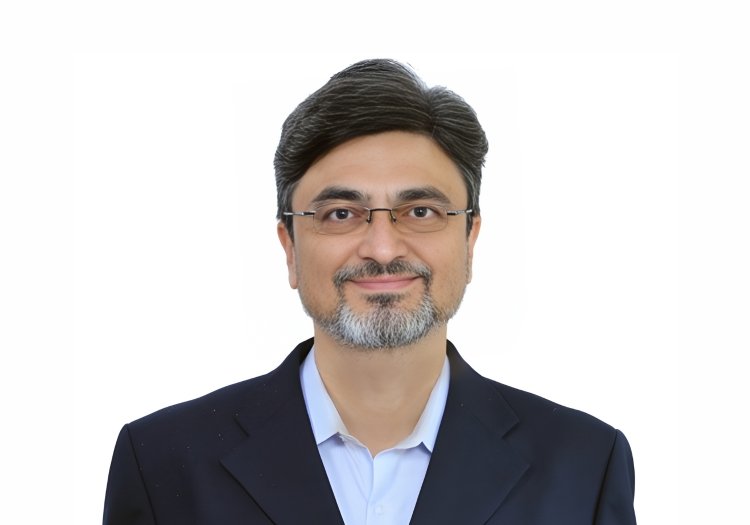
“Additive manufacturing has stabilised but faces commercial viability challenges for widespread use. Automation remains a continuous pursuit in manufacturing, including die and mould operations. Simulation is now a basic, essential step in die development,” says Pankaj Abhyankar, Executive Vice President, Godrej and Boyce Mfg. Co. Pvt. Ltd. This interview was taken for DMI 2026.
What key trends, challenges, or growth opportunities do you see in the Indian Die and Mould Industry today, and how might they evolve by 2026?
The key trends influencing die and moulds stem from automotive mega trends such as lightweighting and forthcoming emission norms like BS7 and CAFE 3 regulations. These will accelerate new product development to meet the requirements, creating increased opportunities for the dies and moulds industry through new product developments and high-end technologies. Newer capabilities will emerge in thin wall products, Mega and Giga castings using challenging aluminium and magnesium alloys.
Which sectors (e.g., Automotive, EVs, Aerospace, Medical, Defence etc.) are driving demand for Dies and Moulds, and what opportunities do they present for the industry?
Automotive remains the major sector driving demand for dies and moulds, encompassing ICE, EVs, and hybrids combined. The transition from ICE to EV via hybrids presents positive opportunities for the die and mould industry across all three segments. Aerospace and defence sectors are emerging next, though they will require sufficient scale to justify investments in permanent dies and moulds.
How is India’s manufacturing push (e.g., Make in India, China+1) impacting the Die and Mould sector overall?
India’s manufacturing push through Make in India and China+1 has not significantly impacted the die and mould industry, as customers have returned to China after the initial Make in India enthusiasm faded. Chinese makers continue to attract OEMs and part makers with shorter lead times and lower costs. However, quality- and reliability-focused customers prefer domestic die makers due to supply and service uncertainties.
What innovations or technologies (e.g., additive manufacturing, automation, AI, simulations) are shaping the competitiveness of the die and mould industry?
The die and mould industry is constantly evolving with the newest technologies. Additive manufacturing has stabilised but faces commercial viability challenges for widespread use. Automation remains a continuous pursuit in manufacturing, including die and mould operations. Simulation is now a basic, essential step in die development. AI, being newer, is first adopted in data-driven processes, with future applications in technical work for speed, accuracy, and reduced talent dependency.
What role do initiatives like precision manufacturing and talent development play in expanding the Die and Mould industry into new markets?
Newer markets introduce technological challenges such as processing new materials, achieving tighter tolerances, and producing parts with lesser thickness. This requires deeper understanding of processes, material behaviour, and advances in production technologies. Integrating material, machine, and methods will be crucial for meeting new market requirements.
How has participating in past DMI exhibitions contributed to growth, networking, or collaborations within the tooling ecosystem?
It serves as a good ground for showcasing, demonstrating, and discussing new developments in the field. Opportunities for networking and breaking the ice among industry peers are essential and remain one of the highlights of past DMI exhibitions.
What makes DMI 2026 a valuable platform for the Die and Mould industry to showcase its strengths to domestic or global customers?
The opportunity to showcase Indian die makers’ capabilities to the world is very important. DMI 2026 will provide the platform to meet this objective. Large participation from both domestic and overseas companies will help achieve this goal.
What products, technologies, or launches are you planning to showcase at DMI 2026, and why are they significant for the industry?
Tooling SBU of Godrej Enterprises has always been at the forefront in developing and adapting newer technologies to meet stringent customer demands. We will be showcasing our contributions to the emerging EV industry and large automation solutions for mass production industries.