
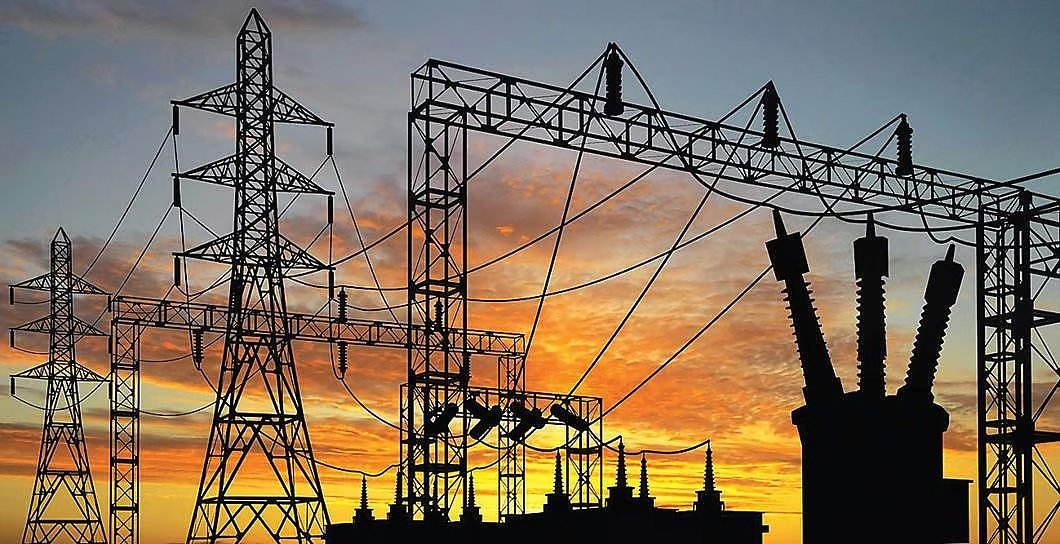
The Tamil Nadu power grid is quietly doing the heavy lifting for industry. In India, summer arrives in waves of punishing heat that push families to the brink and the power grids to breaking point. States like Uttar Pradesh, Rajasthan, Maharashtra, and Madhya Pradesh suffer from grid overloads, transformer fires, cascading failures, and prolonged outages leaving millions of homes, hospitals, and businesses without power during peak demand. The Tamil N adu story has been strikingly different, with the grid continuing to hold despite the elevated temperatures.
How The Tamil Nadu Power Grid Was Built
Tamil Nadu’s power sector’s excellent performance is well documented. According to the 14th Integrated Rating and Ranking of DISCOMs (distribution companies) released by the Ministry of Power for 2024-25, the state’s Aggregate Technical and Commercial (AT&C) losses stand at 10.96%, lower than many other states. After all, every percentage point of AT&C loss is a household billed for power that it never received, a utility starved of the revenue it needs to reinvest, and a grid not getting any power.
Tamil Nadu’s per capita electricity consumption stands at 1,934 kWh — well above the national average of 1,460 kWh. The state has achieved near-universal electrification, fewer and shorter power outages (load shedding), and consistent availability even during peak summer demand. These outcomes emerge from policy choices made consistently, over years, by planners who understood that power infrastructure is a long game.
Contrast this with another southern state, Kerala. A state with the political will, the rooftop potential, and the public appetite to lead India’s solar transition, yet unable to do so because of a grid that cannot absorb the extra load renewable energy brings. It is a paradox entirely of its own making with its genuine decarbonisation ambition, blocked from its own renewable targets. The reason: a procurement decision made years ago — one that saved money upfront and is now quietly capping the state’s solar future.
Planning over panic
Tamil Nadu’s success lies in the fact that it withstood severe stress even as heatwaves pushed power demand to record highs across districts. This resilience was possible because transformer upgrades had been completed and renewable energy integrated into the grid. The state built its infrastructure not merely for today’s demand, but for tomorrow’s load. It has consistently chosen the harder, costlier, and wiser path of anticipatory investment, guided by a commitment to durability rather than crisis response.
The hidden variable: What goes inside the transformer:
There is one dimension of Tamil Nadu’s infrastructure success that rarely surfaces in policy discussions — and it matters more than ever as fiscal pressure on DISCOMs intensifies. The question is deceptively simple: what should go into the distribution transformers that form the backbone of India’s last-mile grid?
Distribution transformers present on poles and in substations, are the critical link between the high-voltage transmission network and the homes, farms, and factories that depend on power. And the material choices made in their construction determine the success of the investment. These parameters include thermal tolerance, operational life, reliability under sustained high-load conditions, and the total cost to the utility over a transformer’s lifetime.
Deep inside every transformer is a metal that makes this important. It will also resist the slow accumulation of mechanical stress, the micro-fracture that build silently through years of continuous operation, until the system collapses.
The Benchmark and the Challenge
The state has earned its place as India’s reference point for power sector resilience. But the challenges are growing. Since climate variability is not stabilising, and demand peaks will intensify, thermal stress on infrastructure will grow, and the cost of failure will rise.
The lesson from Tamil Nadu’s experience is simple enough, build right for the first time for a grid you will need for the next 20 to 25 years. Because when the next heatwave arrives, as it will, you will have your lights on, while the rest, taking a short-term view, will suffer.