
The Indian Space Research Organisation (ISRO) has successfully launched its next-generation navigation satellite, NVS-03, marking a significant milestone in strengthening India’s indigenous satellite navigation capabilities.
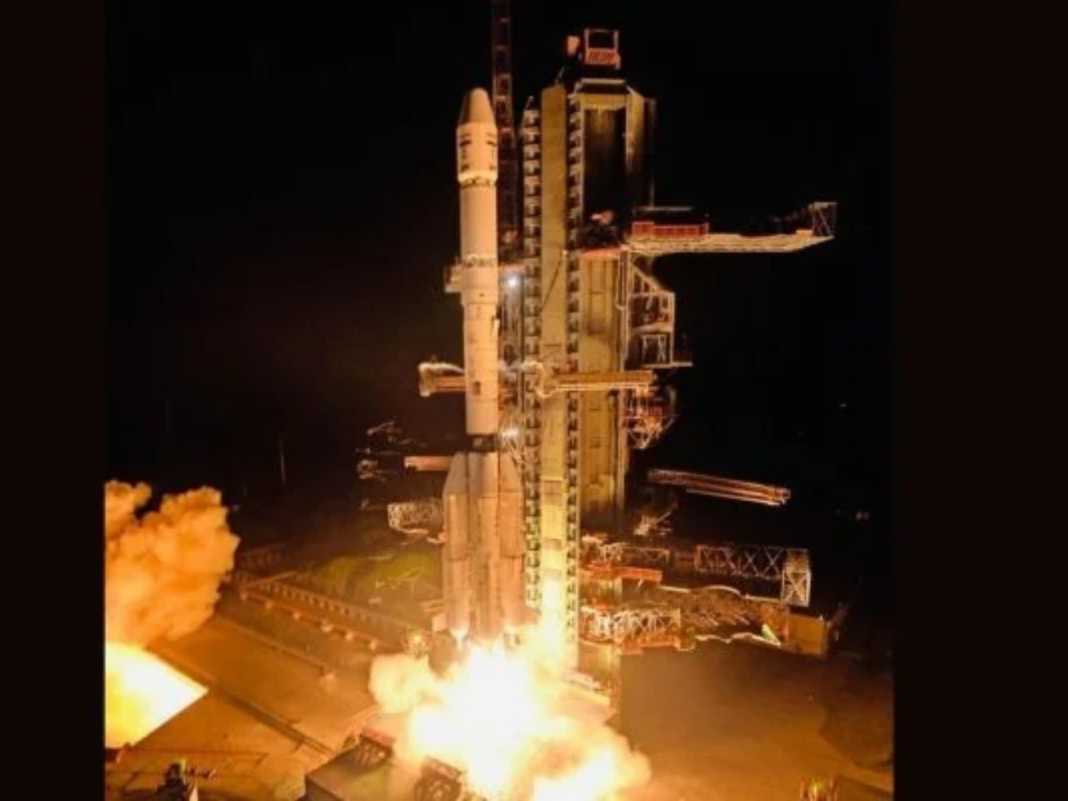
The Geosynchronous Satellite Launch Vehicle (GSLV-F18), carrying the satellite, lifted off from the Second Launch Pad at the Satish Dhawan Space Centre in Sriharikota, Andhra Pradesh. The mission marked the 20th flight of the GSLV. The satellite was successfully separated from the launch vehicle and placed into its intended Geosynchronous Transfer Orbit.
NVS-03 is the third satellite in ISRO’s second-generation navigation satellite series and is designed to improve the continuity and availability of services under the Navigation with Indian Constellation (NavIC), India’s indigenous regional navigation system.
The satellite is equipped with an indigenous atomic clock alongside procured atomic clocks. It also introduces the L1 frequency band in addition to the existing L5 and S bands, expanding NavIC’s capabilities. These technological advancements are expected to strengthen India’s independent positioning, navigation and timing capabilities for civilian, strategic and security applications.
According to ISRO Chairman Dr V. Narayanan, the satellite weighs approximately 2,232 kg and was precisely injected into its intended transfer orbit. He also highlighted that the mission was completed with a turnaround time of just 56 days between two successive GSLV missions, marking the shortest interval achieved so far.
Dr Narayanan further said that ISRO had placed its third indigenous atomic clock in orbit through the NVS-03 mission, while two indigenous atomic clocks were already operational in space. The satellite is part of India’s Regional Navigation Satellite System, which aims to provide navigation services across the country and up to 1,500 km beyond its borders.
The programme envisages a constellation of seven satellites to deliver regional navigation services. Dr Narayanan explained that signals from four satellites could be used for multiple applications, while completing the constellation would be important for integrating navigation services with mobile systems for wider public access.
Vice President C. P. Radhakrishnan and Prime Minister Narendra Modi congratulated ISRO scientists, engineers and the entire team on the successful launch. Both highlighted the mission’s role in strengthening NavIC and advancing India’s self-reliance in critical and advanced space technologies.
The successful mission also reflects ISRO’s continued efforts to develop indigenous space technologies and strengthen India’s capabilities in satellite-based navigation and positioning systems.
(Only the headline of this report may have been reworked by the Manufacturing Tales staff; the rest of the content and picture is auto-generated from a syndicated feed.)