
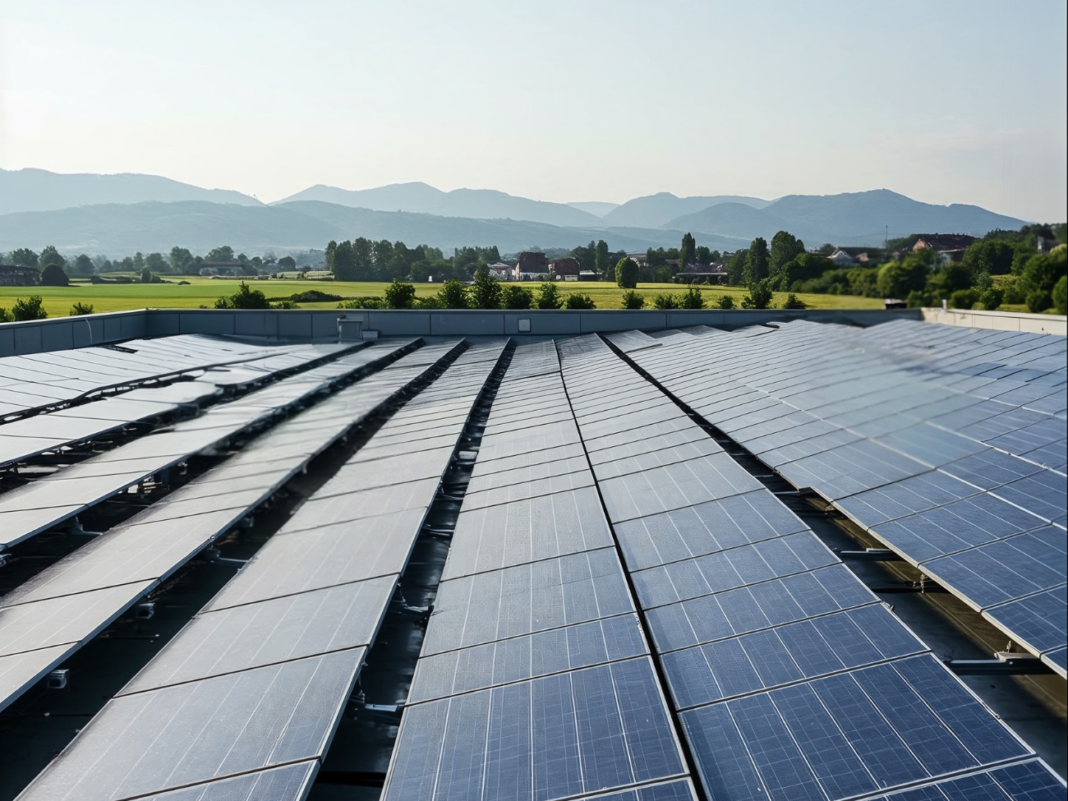

Vikram Solar Limited has announced that its 9 GW N-type TOPCon solar cell manufacturing facility at SIPCOT Industrial Park in Gangaikondan, Tirunelveli district, Tamil Nadu, is on track to produce its first cells in December 2026. The facility will be commissioned in phases to achieve its full annual capacity of 9 GW.
The facility is expected to reduce dependence on imported solar cells, a key component in solar modules, while strengthening domestic manufacturing capabilities. At full capacity, it will supply high-efficiency TOPCon cells for the majority of Vikram Solar’s module production.
The company said the facility will support the production of solar modules manufactured entirely in India, from cells to frames, for utility-scale projects, rooftop installations and government programmes such as PM Surya Ghar and PM-KUSUM, where domestic content requirements apply. It will also cater to global customers seeking to diversify their supply chains.
Vikram Solar plans to seek enlistment for cells manufactured at the facility under the Approved List of Models and Manufacturers (ALMM) List-II in due course.
The cell plant is the second of three phases in Vikram Solar’s integration roadmap at Gangaikondan. The first, the 6 GW module plant, was inaugurated by the Hon’ble Chief Minister of Tamil Nadu in August 2026; nd the third being a 9 GW ingot and wafer facility, that is board-approved and targeted for FY29. Within the cell phase, capacity is planned to expand to 12 GW.
On completion, Gangaikondan will be one of the few sites in India where ingots, wafers, cells and modules are made together. The campus will provide more than 2000 direct & indirect employment. The facility is being developed through the company’s wholly owned subsidiary, VSL Green Power Private Limited, on its nearly 200-acre integrated campus, where co- location shortens supply cycles, tightens quality control and lowers logistics cost.
Gyanesh Chaudhary, Chairman & Managing Director, Vikram Solar, said: “Indian module makers, including us, have built their businesses around imported cells. Gangaikondan ends that for Vikram Solar. Cells are where the value, the technology and the risk in a module sit, and in December we start making them here. It is the most important step in our integration journey, and not the last: our roadmap runs from wafer to module, on Indian soil.”