
Union Minister of Commerce and Industry Piyush Goyal has identified quality, economies of scale, global market access and inclusivity as four key priorities for transforming India’s industrial sector and establishing the country as a globally recognised manufacturing destination.
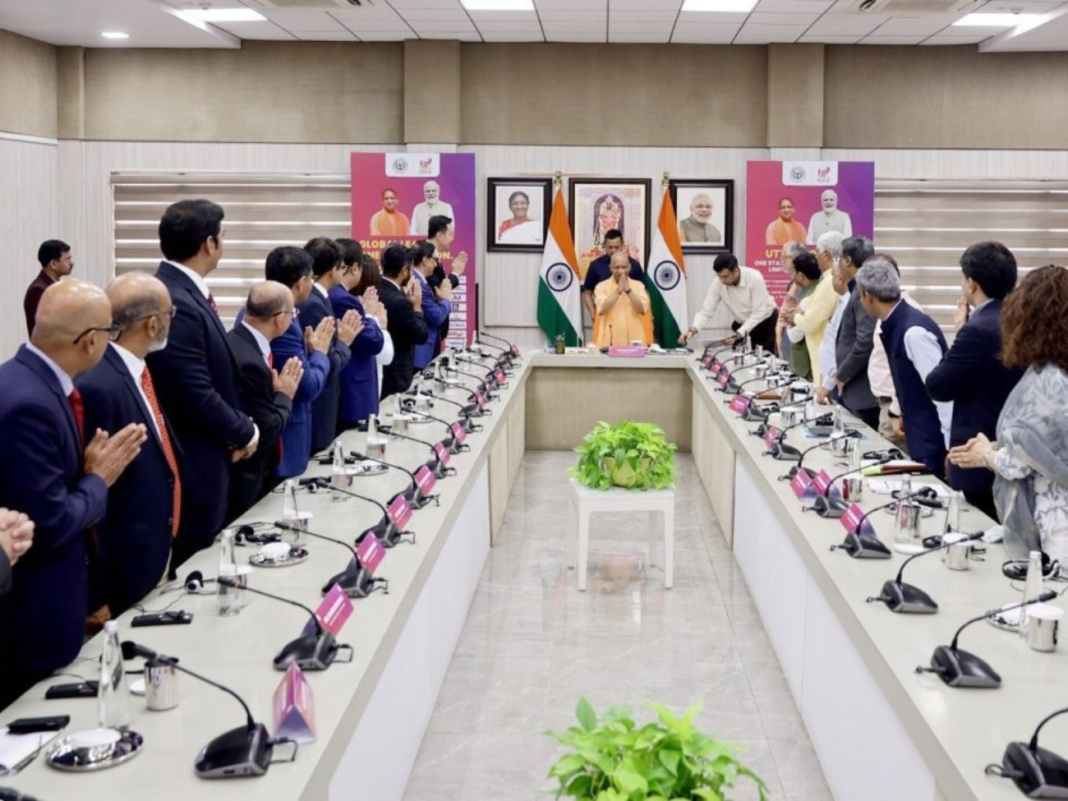
According to a press release issued by the Press Information Bureau (PIB), Goyal made these remarks while addressing the Fourth National Conference on India’s Industrial Transformation, organised by the Institute for Studies in Industrial Development (ISID) and IDRA.
The Minister emphasised that quality must remain the foremost priority for Indian manufacturers, reiterating Prime Minister Narendra Modi’s vision of “Zero Defect, Zero Effect”. He said that innovation and industrial growth require collaboration among the government, private sector and academia.
Highlighting global market access, Goyal said that free trade agreements (FTAs) are opening opportunities for Indian businesses to expand their international presence and compete for a larger share of global markets. He stressed the need for manufacturers to leverage preferential market access to strengthen exports and competitiveness.
Goyal also pointed to India’s domestic market of 1.4 billion people, combined with access to international markets, as an opportunity for manufacturers to achieve economies of scale, improve affordability and reduce production costs. He added that industrial transformation must be sustainable and inclusive, ensuring that economic growth translates into wider prosperity for people across the country.
Goyal said that the vision of Viksit Bharat 2047 was a collective commitment of 1.4 billion Indians and called for coordinated efforts across government, industry, academia and research institutions to achieve this objective. He said that the country must draw lessons from its economic history, assess its present position realistically and develop an agenda for the future. Emphasising the importance of intergenerational collaboration, he observed that the experience of senior professionals and the energy of young people must come together to address contemporary challenges, rather than working in silos.
On India’s trade policy, Goyal said that the country’s trade agreements were not limited to reducing tariffs, framing rules of origin or securing market access. They were comprehensive partnerships that considered India’s competitive strengths, identified opportunities for exports, protected sensitive sectors and facilitated access to high-technology products, graphics processing units (GPUs), memory technology, medical technology and other goods required for India’s development.
He said that India’s trade negotiations also encompassed services, investments, education, skill development, technology partnerships and cooperation towards climate goals and countries’ intended nationally determined contributions. These comprehensive agreements were laying the foundation for India’s integration with the global economy while protecting its sensitivities and defensive interests through extensive stakeholder consultations before an agreement was concluded.
Referring to the India-US trade deal negotiations, Goyal expressed confidence that when the details of the deal are released, the people of India will recognise that the sensitive interests of farmers and other stakeholders have not been compromised and that India will be placed at a strong comparative advantage.
Goyal explained that trade was fundamentally about comparative advantage and competitiveness, rather than absolute numbers alone. He observed that many developed countries had structured their tariff schedules to impose high duties on labour-intensive goods, using them as negotiating instruments.
He said that India’s trade agreements covered 38 developed and relatively prosperous countries, creating complementary trade opportunities for both sides, with India exporting products they needed and importing products required for its development. He described these as win-win partnerships and emphasised that effective agreements should be fair, equitable and balanced.
Goyal stated that the nine free trade and bilateral trade agreements concluded by the Government had opened up preferential market opportunities in economies with an aggregate GDP of USD 60 trillion, compared with USD 10 trillion covered by agreements concluded before 2014. He said that the earlier agreements were largely with countries competing with India, whereas the current approach sought to foster complementary economic relationships.
He also highlighted the growing international recognition of Indian talent and skills. Recalling a conversation with the German Foreign Minister regarding the migration agreement between India and Germany and the requirement for 90,000 Indians annually, Goyal said that he was told Germany needed substantially more Indian talent. He cited the presence of Indian professionals in senior positions at Fortune 500 companies and among developers of cutting-edge technologies as evidence of the capabilities of India’s workforce.
The Minister expressed confidence that India would continue to be the world’s fastest-growing major economy for another 20 to 25 years, attributing this prospect to the talent, skills and energy of its people.
Goyal stressed that climate action must be guided by the principles of polluter pays and common but differentiated responsibilities, with adequate financial and technological support for developing countries. He highlighted that 60 per cent of India’s installed electricity capacity came from green and renewable sources, while coal remained essential for energy security and affordable power.
Goyal highlighted that India has moved from being predominantly a buyer of products manufactured elsewhere to becoming a country increasingly recognised for manufacturing. The Minister added that the Make in India initiative and phased manufacturing programmes across different sectors had helped bring factories to India and increase domestic production. He said that India would continue to manufacture a growing share of its requirements domestically.
Goyal emphasised that innovation would be central to industrial transformation. Public institutions, private enterprises and academia would need to work together, with the government acting primarily as a facilitator and catalyst for private-sector-led innovation. He highlighted the scientific knowledge, discoveries and research capabilities available in IITs, engineering colleges and other institutions of higher learning and science.
Citing the Startup Fund of Funds, he said that the first fund had been fully utilised and that the second fund was now in place. He also referred to the Research, Development and Innovation Fund (RDIF) in India and said that these initiatives had contributed to the development of India’s startup ecosystem, making it the world’s third-largest.
Goyal also highlighted the opening of the space sector to private participation. He said that India’s space economy, valued at USD 8.4 billion at the time of his address, had the potential to reach USD 44 billion by 2033. He observed that international partners were increasingly interested in collaboration with India in space, artificial intelligence, computing and startups.
Referring to his recent visit to Germany, Goyal said that German research institutions, some employing twelve to thirty thousand people, were working closely with the private sector and have expressed interest in collaborating with India. He attributed this growing interest to the trust in partnership between India and Germany and to the confidence that India offered in terms of talent, skills, fair play and equal opportunity.
The Minister said that the new trade agreements and international relationships being developed under Prime Minister Modi’s leadership were opening opportunities for joint research, technology development and industrial collaboration. He said that these partnerships could help India transform its growth trajectory by combining domestic capabilities with international expertise and investment.
Goyal concluded by commending ISID for organising three days of serious deliberations on India’s industrial future. He reiterated that the country’s industrial transformation would depend on sustained attention to quality, access to global markets, economies of scale and inclusivity, supported by collaboration across manufacturing, innovation and research. He extended his best wishes to the conference and its participants for their contributions towards achieving Viksit Bharat 2047.
Source- Press Information Bureau (PIB)