

Executive Summary for CEOs
The 18th BRICS Summit in New Delhi delivered major policy shifts for Indian manufacturing: collective pushback against unilateral carbon tariffs (CBAM), non-dollar local currency settlement mechanisms via the BRICS Payment Task Force, a cross-border MSME Invoice Discounting framework, and crucial supply-chain predictability for capital machinery, APIs, and industrial components following expanded India-China bilateral discussions.
Introduction: A Macro Shift in Manufacturing Dynamics
The adoption of the New Delhi Declaration at the 18th BRICS Summit marks a distinct pivot toward industrial resilience, localized trade settlements, and supply-chain de-risking for emerging market economies.
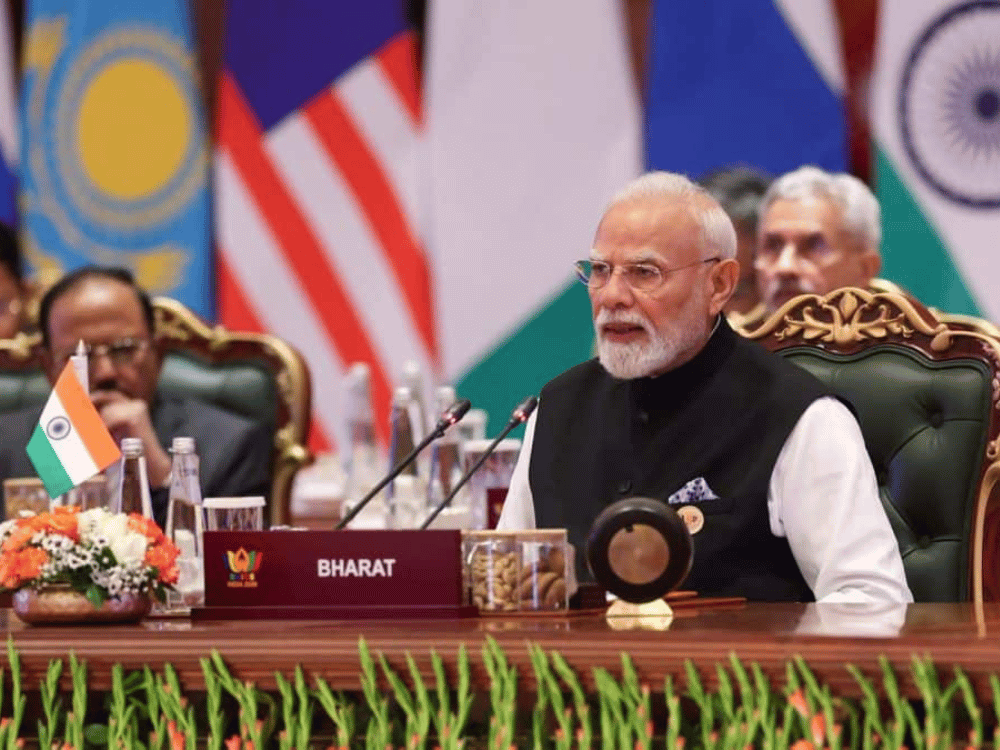
Held under India’s chairship in New Delhi, the summit brought together leaders from Brazil, Russia, India, China, South Africa, the UAE, Iran, and partner nations. While global headlines focused on geopolitical alignment, the underlying outcomes establish actionable policy shifts that directly influence capital allocation, raw material procurement, and export strategy for Indian manufacturing executives.
Key Outcomes of the New Delhi Declaration 2026
1. Countering Unilateral Carbon Tariffs and Protectionism
The New Delhi Declaration takes an explicit stance against unilateral trade measures, carbon border adjustment mechanisms (such as the EU and UK CBAM), and non-tariff trade barriers that distort global value chains. The Declaration demands the immediate restoration of a fully functioning, binding WTO dispute settlement mechanism.
- Operational Impact: Indian heavy industries—particularly steel, aluminum, chemicals, automotive components, and engineering goods—face rising compliance costs and potential export penalties from Western carbon import taxes. The collective BRICS policy stance provides diplomatic leverage for Indian exporters while advocating for WTO-aligned rules that preserve export price competitiveness.
2. Critical Minerals and Industrial Metallurgy Resilience
BRICS member states committed to securing resilient, diversified, and sustainable supply chains for critical minerals, rare earths, and industrial raw materials necessary for high-tech manufacturing, energy transition, and defense mobility.
- Operational Impact: For automotive OEMs, EV battery manufacturers, semiconductor packaging units, and precision engineering plants, secured access to critical minerals (lithium, cobalt, nickel, tungsten, rare earth elements) reduces reliance on volatile spot markets and ensures long-term raw material predictability.
3. Local Currency Settlement and Interoperable Banking Infrastructure
The summit advanced the framework of the BRICS Payment Task Force (BPTF) to enable local currency trade settlements, cross-border digital messaging, and direct payment linkages between national banking systems.
- Operational Impact: Manufacturers importing capital machinery, industrial components, active pharmaceutical ingredients (APIs), or raw materials from partner states (e.g., UAE, Brazil, Russia) can settle transactions directly in INR or local partner currencies. This cuts currency conversion fees, mitigates US dollar volatility, and reduces hedging costs on long-gestation machinery and equipment contracts.
4. Unlocking MSME Liquidity: Cross-Border Invoice Discounting
The Declaration welcomed the Jaipur Consensus to establish an international Invoice Discounting Mechanism across BRICS member states, aimed at enabling seamless cross-border invoice discounting for small and medium suppliers.
- Operational Impact: MSMEs form the backbone of India’s manufacturing tier-2 and tier-3 supply chains but suffer from extended payment cycles on cross-border orders. An integrated invoice discounting framework allows MSME vendors to unlock working capital faster, driving cash-flow stability across domestic industrial clusters.
5. Industry 4.0 Deployment: India Centre for BRICS Industrial Competencies
The summit endorsed the establishment of the India Centre for BRICS Industrial Competencies, alongside a proposed BRICS Repository for Digital Public Infrastructure (DPI).
- Operational Impact: Accelerates the adoption of smart manufacturing practices—including Artificial Intelligence, Industrial IoT, digital twins, and additive manufacturing—across mid-sized Indian factory floors. The center offers standardized training frameworks to upskill industrial technicians in advanced digital production.
Detailed Analysis: India-China Bilateral Dialogue & Manufacturing Outcomes
On the sidelines of the summit, Prime Minister Narendra Modi and Chinese President Xi Jinping held formal 50-minute bilateral discussions. The outcomes bear deep direct and indirect consequences for Indian manufacturing operations:
1. Supply Chain Predictability for Industrial Intermediate Goods
- The Context: Over 98% of India’s $131.63 billion imports from China consist of industrial inputs—active pharmaceutical ingredients (APIs), electronics components, solar wafers, capital equipment, standard mold bases, and specialized chemicals.
- Bilateral Outcome: Both leaders formally agreed to maintain predictable, uninterrupted global supply chains. China committed to streamlining the supply of essential industrial inputs and capital machinery needed by Indian factories.
- Impact on Indian Plants: Protects Indian manufacturers from sudden export bans or administrative delays on critical inputs, ensuring continuous assembly-line operations across pharmaceuticals, electronics assembly, auto components, and heavy engineering.
2. Addressing Structural Trade Deficits and Market Access
- The Context: India’s bilateral trade deficit with China reached $112.16 billion in FY 2025–26, driven by asymmetric tariff and non-tariff barriers on Indian manufactured goods entering China.
- Bilateral Outcome: Both sides agreed on the necessity of addressing structural trade imbalances through balanced economic engagement. India advocated for expanded, predictable market access in China for value-added Indian engineering goods, specialty chemicals, IT services, and pharmaceuticals.
- Impact on Indian Plants: Opens structured avenues for Indian manufacturers to penetrate Chinese domestic supply chains, particularly in high-grade pharmaceuticals, precision components, and processed industrial materials.
3. Business Mobility & Technical Specialist Visas
- The Context: Following border tensions in recent years, Indian manufacturers faced severe delays in securing business visas for Chinese technical experts required to install, calibrate, and service complex manufacturing equipment imported from China.
- Bilateral Outcome: Both nations agreed to facilitate business travel, trade delegation exchanges, and corporate mobility to support bilateral commercial projects.
- Impact on Indian Plants: Significantly reduces commissioning downtime for new production lines in India. Factory teams can rapidly bring in Chinese equipment specialists for machinery assembly, CNC calibration, tool try-outs, and technical knowledge transfer.
4. Safeguarding Against Predatory Pricing and Dumping
- The Context: Domestic Indian manufacturers across steel, solar modules, chemicals, and plastic injection molds have frequently faced margin erosion due to low-cost imports entering the Indian market.
- Bilateral Outcome: Discussions reinforced the alignment with WTO principles and fair commercial trade under the “Three Mutuals” (Mutual Respect, Mutual Sensitivity, and Mutual Interest).
- Impact on Indian Plants: Encourages healthier pricing benchmarks in the domestic market, allowing Indian primary producers and component makers to invest in domestic capacity expansion with greater margin security.
Impact of Other Bilateral Engagements
1. India – UAE Bilateral Integration
- Strategic Focus: Deepening trade under CEPA and securing greenfield foreign direct investment into Indian heavy manufacturing.
- Impact on Indian Manufacturing: Highlighted by a $11.5 billion greenfield aluminum investment by UAE’s IHC in Odisha, this cooperation expands domestic raw material availability, creates heavy industrial infrastructure, and provides Indian manufacturers with a duty-free export doorway into the MENA region.
2. India – Brazil Industrial Synergy
- Strategic Focus: Automotive supply chains, bio-energy systems, defense manufacturing, and agricultural equipment.
- Impact on Indian Manufacturing: Alignment with Brazil’s industrial base creates export corridors for Indian tier-1 auto component makers, forging units, and agricultural machinery OEMs looking to integrate into South American supply chains.
3. India – Russia Joint Industrial Production
- Strategic Focus: Heavy engineering, machine-tool manufacturing, aviation components, and local currency financial clearing.
- Impact on Indian Manufacturing: Opens avenues for Indian engineering plants to supply precision parts and machinery components to Russian industrial sectors pursuing import substitution, while securing long-term supplies of Russian metallurgical inputs.
Strategic Action Items for Manufacturing Leadership
- Supply Chain Audit: Re-evaluate import dependencies on industrial inputs and align procurement strategies with newly stabilized BRICS trade and local currency settlement frameworks.
- Capital Expenditure & Commissioning: Take advantage of streamlined business mobility with China to accelerate plant installation and machinery calibration cycles.
- Forex & Working Capital Management: Transition cross-border procurement contracts with BRICS partner suppliers to local currency invoicing to reduce foreign exchange hedging overheads.
- CBAM Compliance Mapping: Begin internal carbon auditing across factory operations to prepare for emerging carbon border taxes, using the diplomatic backing of BRICS to plan medium-term decarbonization schedules.